
I don’t go to farms to talk politics.
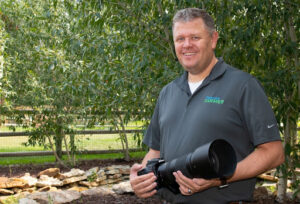
In fact, my official stance is I will never talk politics while visiting a farm for work. I don’t cover the policy beat for my publication. I’m there to take photos or talk machinery, not opine about the power of the presidency or the state of the Supreme Court.
So why have some of the best political conversations I’ve had been in combine cabs while I’m on the job?
It’s a failure of mine, obviously, and a testament to the ever-present role politics plays in our lives today. And still, it says a lot more about what’s good in the world than what’s bad.
As crazy as the world may seem, it makes a lot more sense when you’re talking to someone face to face as opposed to reading someone’s online rant.
I came from the branch of journalism hell bent on never publicly sharing a political opinion. You wouldn’t want anyone out there thinking you had thoughts, of course. There are to be no yard signs or flags, campaign donations or endorsements.
Those are easy boxes to check.
It’s a lot harder to resist a comment or two (or 200) on social media, however, and I’ve certainly lapsed more there.
Some people are just so wrong, and what if they don’t know it, right? What if no one ever points it out?
Good luck making it through the world today without politics coming up.
It happens often even before I show up at a farm.
Writing for Progressive Farmer magazine, the No. 1 misunderstanding I encounter regarding my publication when in the field is, of course, where I actually work. Progressive Farmer, Farm Progress, Progressive Dairy, Progressive Cattle, etc. I’ve been mistaken for all of them. So many words in the English language, and we all had to settle on a variation of one?
The No. 2 mistake I encounter, from those unfamiliar with Progressive Farmer’s long history, is that we’re somehow coming to the farm with political perspective.
“Oh, not that kind of progressive,” I rush to say. “We were founded by a Confederate veteran more 140 years ago, so, no, not that kind of progressive.”
People make assumptions. This year a Texas rancher asked me how I could possibly stand to work in the media.
I struggled to answer.
“I don’t know, they just keep sending me checks?”
I usually greet most political conversations with a lot of “Oh yeah?” and “Hm. Sounds interesting.”
But when I spend real time with story subjects, I usually end up being unabashedly open with them. By the time I leave the best visits, they’re telling me to wish my daughter luck at her dance recital, and I’m wishing their grandmother a happy birthday.
World record corn farmer David Hula knew more about the debate my wife and I were having about a potential cross-country relocation than most of our immediate family. He even checked in later.
It’s more my personality than a strategy, but it does help loosen up our conversations and often leads to interesting, fruitful places.
Still, sometimes a political conversation barrels through my initial hesitancy to reveal the world we see online is not the real world at all. People have nuanced, meaningful reasons for decisions they make, and if all you know of them is what you see online, you’d never know it.
We’re right now neck deep in online opinions, in celebrations and accusations, in wild assumptions and braindead theories.
I’ve never found truth online, just more to hate. I have come a lot closer when I’m face to face, like when I’m talking politics in a combine cab, even when I said I wouldn’t.