
By Chelsea Dinterman
Note: Chelsea Dinterman earned an IFAJ stipend to attend the 2025 World Seed Congress.

Nearly 6,000 miles from home, I watched a familiar scene unfold. A group of journalists congregating outside a local farmer’s home. The family matriarch bustling in and out, delivering trays of snacks and three separate drink options. Her husband welcoming us and providing a run-down of his operation. It was just like any other farm tour I’ve attended, save for the fact we were chatting about lettuce through a translator.
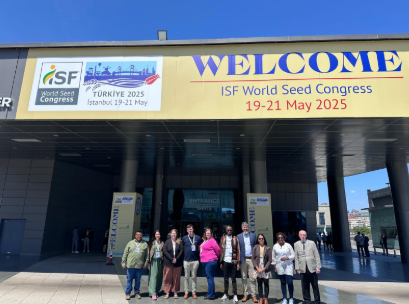
But I wasn’t in Iowa, or even stateside. Instead, I was in Antalya, Turkey as part of the IFAJ guild invited to attend the 2025 World Seed Congress by the International Seed Federation.
After three days of learning sessions, I had begun to see similarities between the global seed industry and regional American agriculture. Topics of conversation were familiar, from how to handle threats from climate change and trade policies, to how the industry will adapt new technologies like biologicals and gene editing, and food security concerns.
“We have to continue to evolve technology and innovation. We don’t have a choice,” said Andy LaVigne, President and CEO of the American Seed Trade Association, in one session. “Mother Nature moves at a rapid pace…We have massive opportunities in genetics, plant breeding, seed treatments, and other tools that we’re bringing to global farmers.”
I’ve heard that sentiment a hundred times, but it was brought into sharp focus while touring Turkish farms such as Özaltın’s tomato greenhouses.
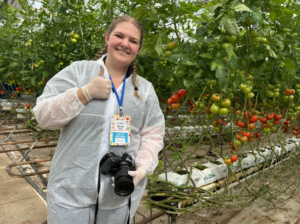
Before entering, we suited up in protective gear to shield the crop from disease. Similar to U.S. corn and soybean farmers, Turkish tomato producers must balance production choices with market demand.
“In this area, there are a lot of cattle and white flies which can carry tomato yellow leaf curl virus (TYCLV),” said Mustafa Sürmeli, general manager for Özaltın. “We are growing some Clunty [variety] tomatoes because they have a high resistance to TYLCV.”
Selecting resistant varieties allows Özaltın to use less pesticides, a perk for the freight export market. However, tomato growers also face rapidly evolving diseases with little options for risk management.
Tomato brown rugose fruit virus, for example, caused up to 100% yield losses in some parts of the world when it was first identified.
“Seed companies had to react really fast to start bringing in resistance,” said Jason Sparks, global communications leader for Syngenta. “There’s still a lot of work going on in portfolios to turn over from low to high resistance. We wear protective gear because they’re trying to be very careful about introducing any kind of pathogen.”
When it comes to crops, I almost exclusively cover corn and soybeans. On its surface, stepping into a Turkish greenhouse felt a lot like stepping into a whole new world. As it turns out, Turkey and the United States are not that different after all, and I will carry this new perspective with me for the rest of my career.
Thanks to the International Seed Federation and IFAJ for sponsoring this trip!
– Dinterman is agronomy and livestock editor at Successful Farming.