By Bill Spiegel, Byline Editor
The New Year had barely begun when my social media feed bludgeoned me with statistics from friends and relatives who mentioned they had “exceeded their reading goals for 2025,” and were already planning which books they would consume in 2026.
Here at ACN Byline World Headquarters, the constant pursuit of high-quality content to populate the world’s most-read monthly e-newsletter designed specifically for ag communicators sometimes gets in the way of reading actual books, but fortunately, ACN members have given us plenty of titles to consider reading this year. Here is a list curated by your fellow members.
Please note: we have links to Amazon on most of these books, but consider buying from a local bookseller or checking them out from your local library.
- The Covenant of Water, by Abraham Verghese. Published in 2023, the Covenant follows three generations of a Christian family in Kerala, India, from 1900 to 1977, who are afflicted by a curse where at least one person in each generation dies by drowning. It centers on the family’s matriarch and explores the themes of love, faith, medicine and family. “It’s a long book but so well-written and interesting, with intertwining story lines and a good look at the customs and culture in India,” says ACN member JoAnn Alumbaugh. It has a 4.6 review rating and more than 94,000 reviews on Goodreads.
- Atomic Habits, by James Clear. A repeat from last year’s list, and recommended by several ACN members, this is “an easy and proven way to build good habits and break bad ones”, according to the subtitle of this 320-page book. The Amazon description says, “If you’re having trouble changing your habits, the problem isn’t you. The problem is your system. Bad habits repeat themselves again and again not because you don’t want to change, but because you have the wrong system for change. You do not rise to the level of your goals. You fall to the level of your systems. Here, you’ll get a proven system that can take you to new heights.” It was one of the top-selling self-help books of 2018 and 2019, and continues to be popular.
- The Bullfighter Checks her Makeup, by Susan Orlean. With the subtitle, “My encounters with extraordinary people,” who wouldn’t want to read this 2002 book? Steve Werblow, contributing editor to The Furrow and multi-award winning member of ACN, says, “This collection of profiles is a master class in finding a story, observing people, and reveling in language…and every article is a fascinating read. (For a bonus, it’s also fun to read interviews with Orlean about the making of The Orchid Thief into the movie Adaptation and seeing herself turned into a fictional character.)”
- Tommy’s Honour, The Story of Young Tommy Morris and Old Tom Morris, by Kevin Cook. This well-written, history of Scottish father-and-son golf legends from the mid-1800s reads like a novel and dives into the history of the sport of golf, says member Kenna Rathai. The story begins with Tom Morris’ success on local golf courses, and his revolutionary grounds-keeping methods. Then, it dives into young Tom Morris’ own dominance of the professional golf circuit and the pressure he felt as the son of a legend, before his untimely death at age 24.
- The New York Game: Baseball and the Rise of a New City, by Kevin Baker. Recommended by Matt Weeks, this book is “…a great read! I love baseball, and even though I prefer more rural areas, I am fascinated by the history of New York City.” From the early days of semi-professional teams in the city, to scandals and oddities (a naked Babe Ruth anecdote?) this is a “grand slam” of a book, according to one review. This is a New York Times notable pick, and Sports Illustrated’s number one sports book of 2024.
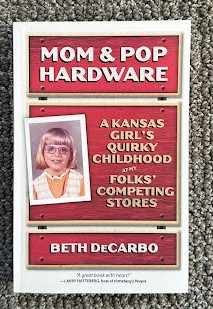
- Mom and Pop Hardware, by Beth DeCarbo. Full disclosure: I was at the Kansas Book Festival when I found this book about two competing–and side-by-side– hardware stores on the Main Street of McPherson, Kansas. The plot twist? One store was owned by the author’s mother; the other, her father. The two stores catered to different client bases, but there are some hijinks that ensue as Beth describes the businesses, the community and her family. Incidentally, I met Beth at a book reading at an independent bookstore, and she was kind, gracious and hilarious. I think anyone from rural or small-town America who grew up in the golden age of active Main Streets will love this book.
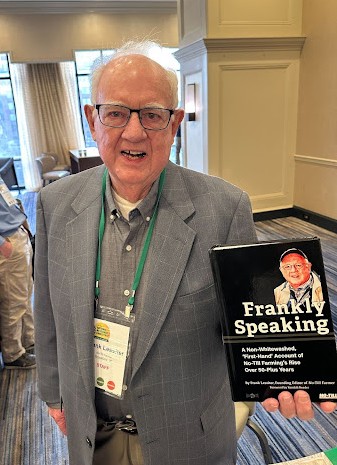
- Frankly Speaking, by Frank Lessiter. The author, a longtime ACN member and the founder of Lessiter Publishing, released last year a compendium of all his “Frankly Speaking” columns, a mainstay in No-Till Farmer since the magazine was established in 1972. “There are over 600 columns in these 800 pages, and there are times when I’ve contradicted myself, because times have changed,” says Lessiter, who signed copies at the annual National No Till Conference in St. Louis Jan. 7-8. For farmers, “Frankly Speaking” is a living history of no-tillage; for writers, it’s a fine example of how writers can express themselves, using facts and well-researched opinions.
- The Let Them Theory, by Mel Robbins. With a 4.05 rating on Goodreads, and 23,000 reviews, this 2024 book by best-selling author Mel Robbins teaches readers to resist focusing on things out of their control and instead prioritize themselves. “Within a few pages, you’ll realize how much energy and time you’ve been wasting trying to control the wrong things at work, in relationships and pursuing your goals,” the summary on Goodreads says. One of my reporter friends says “[this] book helped me reframe so much and I hope I can remember the insight it provides. Really so good and worth every minute.”
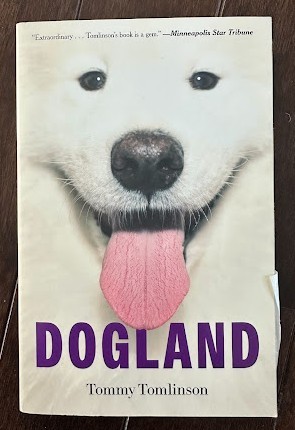
- Dogland: Passion, Glory and Lots of Slobber at the Westminster Dog Show, by Tommy Tomlinson. Recommended by writer and columnist Joe Posnanski, Dogland attempts to answer the question of all dogs: are they happy? Tomlinson follows the life of Striker, a Samoyed, while following the dog show circuit from regional shows all the way to Westminster. He interviews all kinds of experts to answer that eternal question and teach us about the history of dogs in society. It’s a dang good book.
-Spiegel writes for JB Spiegel Inc.