
By Bill Spiegel, Byline editor
With the news of longtime member Dan Crummett’s passing last month, we mourn the loss of one of the industry’s dispensers of wisdom. In that spirit, The Byline asked a few of our members the best advice they received from their mentors. Read Pam Caraway’s tribute to Dan here.
I joined the Farm Progress team in 1995 and met Dan at my first company-wide editorial meeting in April 1996. He was one of many outstanding ag journalists in the room, including Hank Ernst, the editor of Kansas Farmer and my boss. He, like Dan, came from a line of seasoned journalists who were quick to dispense unforgettable advice. For instance, I came back from one of my early road trips to western Kansas with lackluster stories. One interview didn’t pan out at all, and Hank shared this with me:
“Bill, there’s a song that goes like this, ‘If you can’t be with the one you love, then love the one you’re with.’”
Point taken: if one story doesn’t work out, find another one. There are stories everywhere, so don’t be afraid to stop and talk to a farmer in a field, or at a roadside stand, or ask questions at the local sale barn. And now? Some of my favorite stories have come from just asking random people questions. And, that darn song is on my playlist.
It got me thinking. What is some of the best advice our members learned from their mentors?
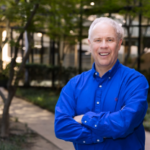
Gil Gullickson, editor, Wallaces Farmer: I started my career at The Farmer/Dakota Farmer as associate editor when it was owned by Webb Publishing in St. Paul, Minn. I wrote what I thought was a deep, detailed story on rotational grazing. My managing editor, Tom Doughty, showed it to me–full of red marks that contrasted with even redder eyes that he incurred from editing it.
“Gil,” he sighed, “it’s great that you interview numerous sources. But you don’t need three of them saying the same thing!”
I always took that nugget of wisdom to nix unnecessary words/sentences/paragraphs in stories that I write and edit.
Steve Werblow, freelance writer: In 1988, I joined Gibbs & Soell Public Relations (now G&S Business Communications) straight out of college. Working for Mark Monroe and Linda Panetta was like a writing bootcamp, and I learned more about writing from them in my first six months at the agency than I did in all my schooling. I still smile at the memory of Linda marching across the office with any of dozens of my articles—cut into ribbons and taped back together in a new order—fluttering like a flag behind her to launch a conversation about organization and flow. Mark would say, “Quote the quotable.” He taught me to listen to my sources and use their voices to shine a light on key points rather than wasting them on details that can be summarized. Rarely do I sit down to write without hearing Mark and Linda in my head…and I’m grateful for that.
Jamie Cole, creative director, Red Barn Media Group: Jack Odle (longtime editor of Progressive Farmer) told me once that the way to break an interview was to always ask this question: “What do you do that is different from everybody else?” What you really want to know about your subject, especially when it comes to farming practices, is what they believe differentiates them from their neighbors. They always know, and might be reluctant to say, but that’s where your skill as an interviewer comes in.
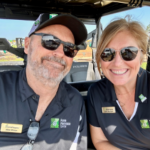
Holly Spangler, editor, Prairie Farmer: Mike Wilson, my mentor at Prairie Farmer, told me to write every word as if your reader has something better to do than read them – because they do. Lesson: farmers are busy and our job is to make their job easier. Their desks and inboxes are piled high, and any number of things are pulling at their attention. We want our publication or our website to be a place where they can quickly get the information they need, without excess words or fluff. Cut to the chase, and do it well. He also said, “never shoot a fat man from the side” which is also an example of cutting to the chase.

Greg Lamp, freelance: We’ve all had downright difficult stories to work on and have wondered if we knew enough to start writing, so we get mired down in even more research and interviews. At an annual staff meeting in the 1980s, Farm Journal’s Editor Earl Ainsworth encouraged us not to second-guess our subject knowledge and truly trust our basic journalistic abilities. He said, “it’s what you do every day and what you do well.”
Pam Caraway, Editor, Farm Futures: Here are two bits of advice. The words that ring in my ear most often came early on from an old-school city editor at a morning newspaper in upstate New York, The Binghamton Sun-Bulletin, at a time when that town had a morning and an evening paper. I was an intern. I’d file my story, then wait at my desk. Eventually, he’d stand up, wave his arm toward me and summon me with his right hand. “Mee,” City Editor Steve Spero would say, “come here. …. Bring your chair.”
One night he asked whether I was bored at the town council meeting.
Yep.
“Mee, just because you were bored doesn’t give you the right to bore our readers.”
Understood.
The second came from my cousin, who was editor of the editorial pages. TOn the morning after my internship ended, I came by the office to pick up a photo that I needed to return to a source. The phone at my desk rang. The guy on the other end owned an ice cream shop, a franchise, and he was ticked that he wasn’t included in an article I wrote on National Ice Cream Day. All summer I’d “researched” the article, visiting only local housemade ice cream shops, bringing pints back to the newsroom. Guy didn’t want to hear how I’d narrowed the focus by not including national brands or even regional brands. He was calling the ACLU and suing me and the paper.
My short career flashed before my eyes. (A summer-long career really does flash.) Looking around the room the only editor there early was my cousin, Mike Doll. So I patched the phone over to him, ran over and explained the situation. He picked up the phone, listened and then said: “Okay, we’ll see you in court.”
Horrifying! Same short flash of my all-too-brief career.
Mike turned to me and said: “Anybody can sue you. Not everybody can win. You wrote a good story.”
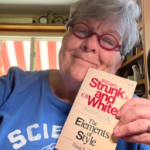
Pamela Cole Smith, crops technology editor, DTN/Progressive Farmer. It was 1979-ish. I hadn’t been on the Prairie Farmer staff long when Gary Reynolds assumed the managing editor responsibilities. I quickly learned that he liked quality writing and creative thought. His quiet and assured way made editing suggestions feel more like a gift than a critique. Here are a few things I remember learning from Gary that continue to serve me well almost 50 years later.
- Read—Good writers get better by reading good writing. He introduced me to authors that I continue to read, such as Willa Cather, Mari Sandoz, Elmer Kelton and many others.
- Keep Your Boots Dirty—The best articles address a need when the reader needs the information. You are more likely to nail that timing by engaging with your audience and listening to them.
- Cling to The Elements of Style—William Strunk Jr. and E.B. White may have written this treasure in the 1950s, but it has a permanent place on my desk. “Omit needless words” remains a mantra, as does “vigorous writing is concise.” Simple writing is sometimes more difficult because every word must count.
- Read Your Writing Out Loud—-Want to omit those needless words and make copy sing? Read your words aloud. It’s easy to gloss over extras and errors when we edit in silence because we already know what we intended to say.
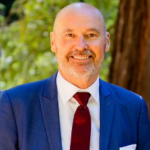
Mike Wilson, Senior Executive Editor, Farm Progress: “I was a college intern at Prairie Farmer magazine and, frankly, I was a bit lost at first. Then my kindly mentor, Managing Editor Gary Reynolds, took his pencil to my copy. Back then, we used actual pencils! The resulting copy came back blood red, but wow, what a lesson.
The first and perhaps most important: lead with the farmer – an anecdote, or some compelling story, to hook the reader. As a farmer-facing publication, I learned that we should try to be a mirror to our audience. I stopped leading with ‘facts’ and started leading with short stories because people are curious about other people.
The second lesson: create a sense of urgency. Explain to the reader why this story is important, right now. In other words, the nut graph – telling the reader why this story matters. Lastly, stop rambling – get to the point, or you’ll lose your audience.
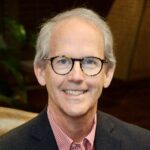
Gregg Hillyer, Editor in Chief Emeritus, Progressive Farmer: “My first job out of college (1979) was as a Field Editor at Wallaces Farmer. As I was gathering my camera and notebook, preparing to leave for an interview with a farmer, Monte Sesker, the magazine’s editor, stopped by. He could tell I was nervous since I didn’t have much on-the-job experience.
Monte said, “Just pretend you’re talking to your neighbor. Keep it conversational. Listen closely. Make them feel like what they’re telling you is the most interesting thing you’ve ever heard. And pause before asking the next question because they usually have more to say.”
I’ve used that invaluable advice throughout my career when conducting interviews.

Larry Dreiling, retired senior field editor, High Plains Journal: During my 30-year run at High Plains Journal, one piece of advice that has stuck with me over the years comes from the help of Jack Odle when he still ran Progressive Farmer, and it was owned by Time-Warner (maybe Time-Life it was that long ago). Jack often brought in his colleagues from sister Time publications to speak at communications clinics.
Once, Jack brought in Alan Abelson, who was the founding editor of Money and earlier had been EIC at Barron’s. He also had Alan stay an extra day to lead a session on magazine leadership for some of his PF people and invited friends from other magazines.
Abelson, was, in my mind, one of the greatest magazine editors ever, so, I jumped at the invitation. No one else at HPJ was in AAEA at the time, so they wouldn’t miss me being gone an extra day.
The day with a noted editor was really great. I think I filled five or six pages of notes on the way he ran his shop.
Wouldn’t you know it, it was the last piece of his mind that’s always stuck with me.
“Always go to lunch.”
That didn’t mean you had to go eat something, Abelson said. It meant you had to get away from your desk midday and do something else. Go with a group unrelated to work and have lunch. Take a walk. If you live near your home, check on your pets.
“Just getting away from things will do you a world of good,” he said.
All these years later, I’ve stuck to it.
What is your best advice from a mentor? We’d love to know! Kindly email the Byline editor at bspiegel2880@gmail.com with your anecdote!
– Spiegel is a freelance writer.