
By Jenny Ring, ACN Board member
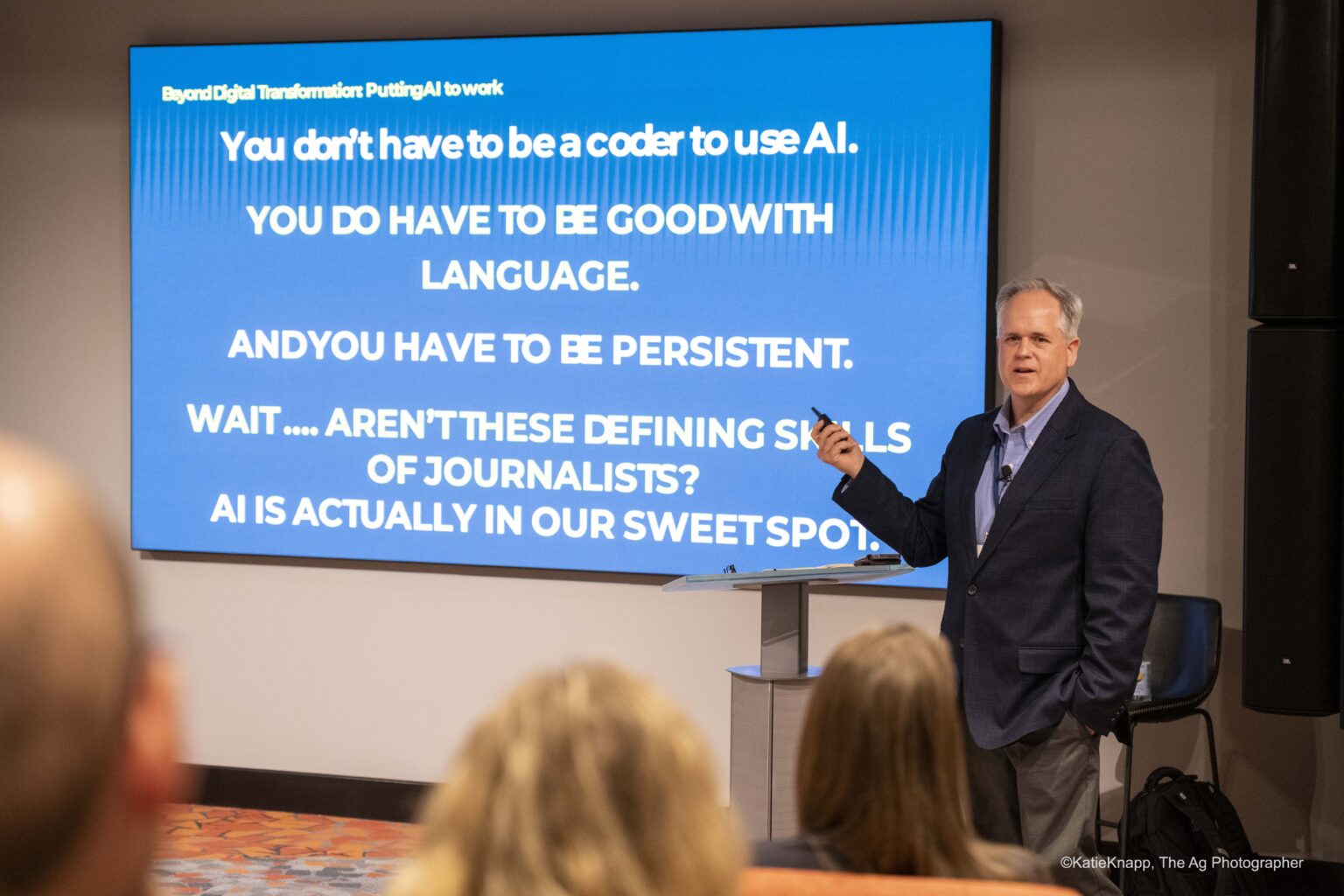
Photo Credit: The Ag Photographer
AI isn’t just another tech tool for agriculture communicators; it’s a turning point that’s arriving fast. As Peter Baniak put it, “This is just the start of a transition… faster than print to digital.” And for people whose work depends on clarity, trust, and accuracy, that speed matters.
Baniak was a guest speaker at the ACN Spring Workshop hosted at Alltech in April. His perspective carries weight because he didn’t start in tech. He came up through the newsroom as a reporter, editor and leader. His shift into AI came from a practical problem: Journalists are probably using it, but we don’t know how. Now his focus has become building ethical guardrails, not chasing more tools.
Why it matters for ag communicators
If you’re anything like me, you’re a little skeptical of AI. I went to school for communications and have spent my entire career honing these skills, so it’s unsettling to see writing tools now available to anyone, regardless of experience. That might sound a bit pessimistic (I’m working on that), but it’s my honest reaction.
AI is changing both sides of communication:
- Audience behavior: how readers find, experience and read news
- Journalist workflow: reporting, writing, editing and analysis
For ag communicators, where credibility is everything, that shift carries extra weight.
What stood out in Baniak’s presentation, though, was a shift in mindset. Instead of seeing AI as something that replaces skill, he framed it as something that can support and enhance it. It pushed me to start thinking about how I can use AI in a way that actually strengthens my work without compromising the quality, thoughtfulness and integrity that good communication depends on.
Trust and Ethics in AI
Bankiak made it clear that trust comes before technology. While audiences want transparency, many still feel uneasy about AI use, creating a tricky balance. Clear communication, such as “Here’s what AI did and here’s what humans did,” helps maintain credibility.
On top of transparency, strong AI policies clearly explain how tools are used, how they’re disclosed, and where human oversight fits in. They also need to stay flexible as the technology evolves. Ultimately, transparency should match how much AI influences the final content. This matters to you as a writer and your audience.
Practical ways to start using AI
Instead of overcomplicating it, start here:
“What part of your job do you want to automate?”
“What part do you want to enhance?”
Then, think:
· Summarizing reports (markets, policy, research)
· Organizing interview notes or summarizing transcriptions
· Catching errors or inconsistencies
· Thought starters during writer’s block
The big picture
For ag communicators, the real advantage won’t come from using AI everywhere; it will come from using it intentionally. The people who win aren’t the ones chasing every new tool, but the ones who stay grounded in trust, clarity and strong storytelling.
If “this is just the start,” as Baniak says, the question isn’t whether to use AI, it’s how to use it without losing what makes your work credible in the first place.
– Ring is strategic communications director at PTX