
For some of us, writing is really, really hard. It can be soul-sucking, mind-numbing, even paralyzing. But then again…it’s the simple task of tapping fingers across a keyboard. That isn’t hard at all.
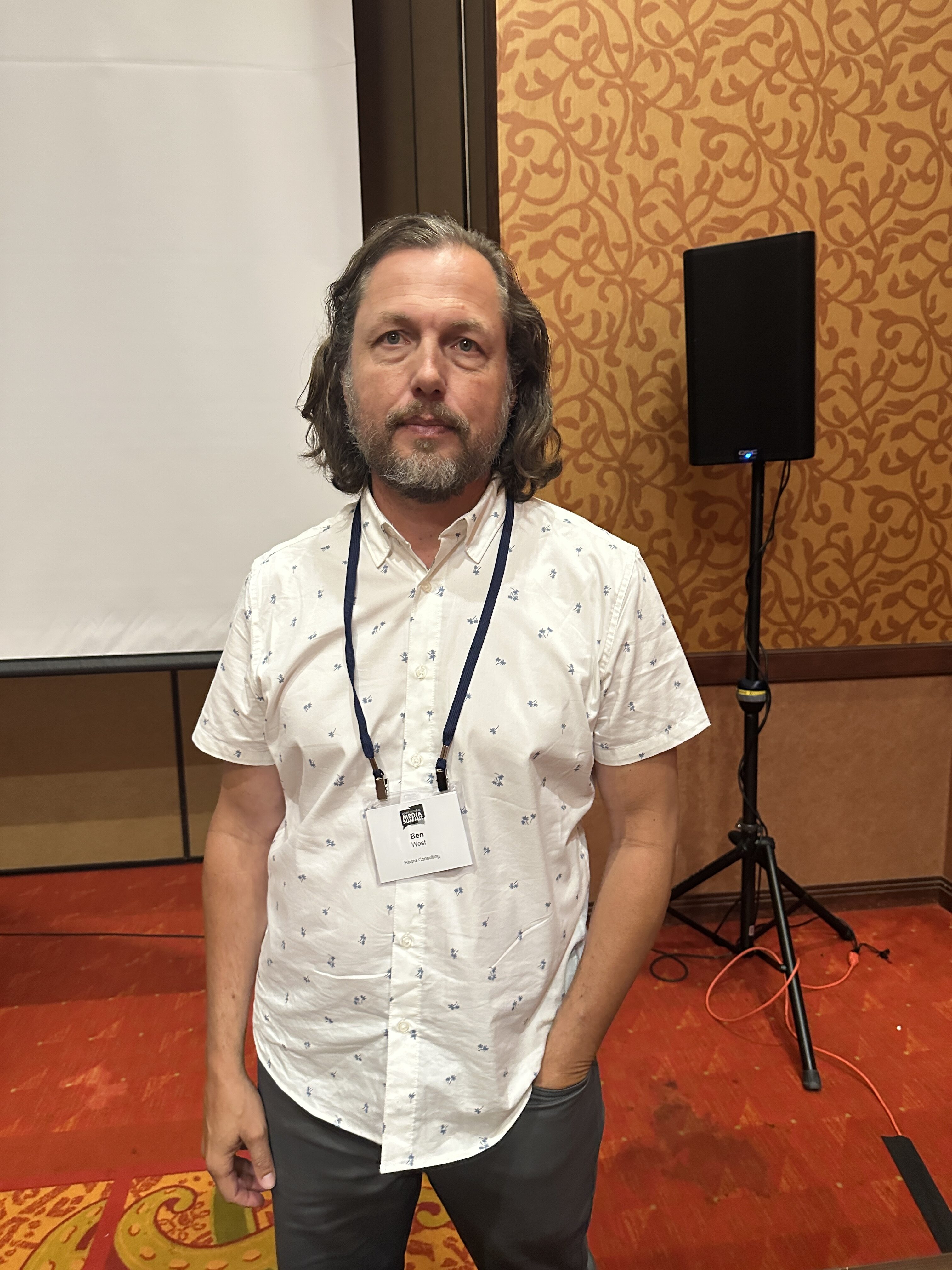
At the Ag Media Summit, July 28-29 in Rogers, Arkansas, author/columnist Sean Dietrich, and writing coach Ben West, Risora Consulting, offered suggestions on how to simplify the task of writing well. They spoke in separate breakout sessions at the annual gathering of ACN, the Livestock Publications Council and Ag Media Council.
- Write for real people. Some of what ag communicators try to explain is difficult and can be laden with jargon. Eliminate needless complexity, West suggests. “Trying to use jargon creates problems. Why can’t we just say what we mean?” Use simple words instead of large words. Avoid acronyms if you can.
- As a newspaper columnist, Dietrich consumes a variety of writing: other newspaper columnists, past and present (Mike Royko is one of his heroes), fiction and non-fiction books. “All good writers I’ve met are huge readers,” Dietrich says.
- Write every day. In 6th grade, Dietrich’s teacher made him write 100 words every day. Looking back, it was a tremendous skill-building exercise. It’s a lost art, even. Many of our ancestors used to journal every day. “It’s amazing how much of a writing society we used to be,” he says. “For me, writing every day is an excuse to use words I wouldn’t normally use.” Even if it is just 100 words, writing every day is a tremendous gift to yourself.
- Lead with subjects and action. Here is a sentence to consider: “Completion of the project is estimated to require three years from beginning to end.” At 14 words long, it’s not awful…but this is better: “We will complete the project in three years.” Eight words – and 43% shorter. The second sentence is written with concrete nouns and verbs and omits “is,” which is a form of “to be,” as is “was, are, were and have been.” Avoid abstract nouns and forms of “to be,” Dietrich urges. “When you use those devices, it becomes a very complex sentence.”
- Omit needless words. It’s a classic line from Strunk and White’s “The Elements of Style,” and remains relevant today, Dietrich says. “Just don’t use words that don’t convey meaning. If they don’t help your audience pay attention, understand or remember, then why put the words on there?” Phrases can often be replaced by single words, he adds:
- was responsible for = caused
- in order to = to
- for the following reason = because
- An example of this is = for example
- In close proximity to = near
- Use AI. Not for the actual writing, of course, but use prompts to ensure that the copy you write meets the criteria of omitting needless words, has action, and is clear and concise. Use the feedback as a copy editor. Practice with AI (editor’s note: my go-to is Claude.AI) to find holes in your work that may need clarification, or additional material to flesh the story out.